Building a more sustainable circular economy together: side streams from Stora Enso’s Imatra Mills put to use
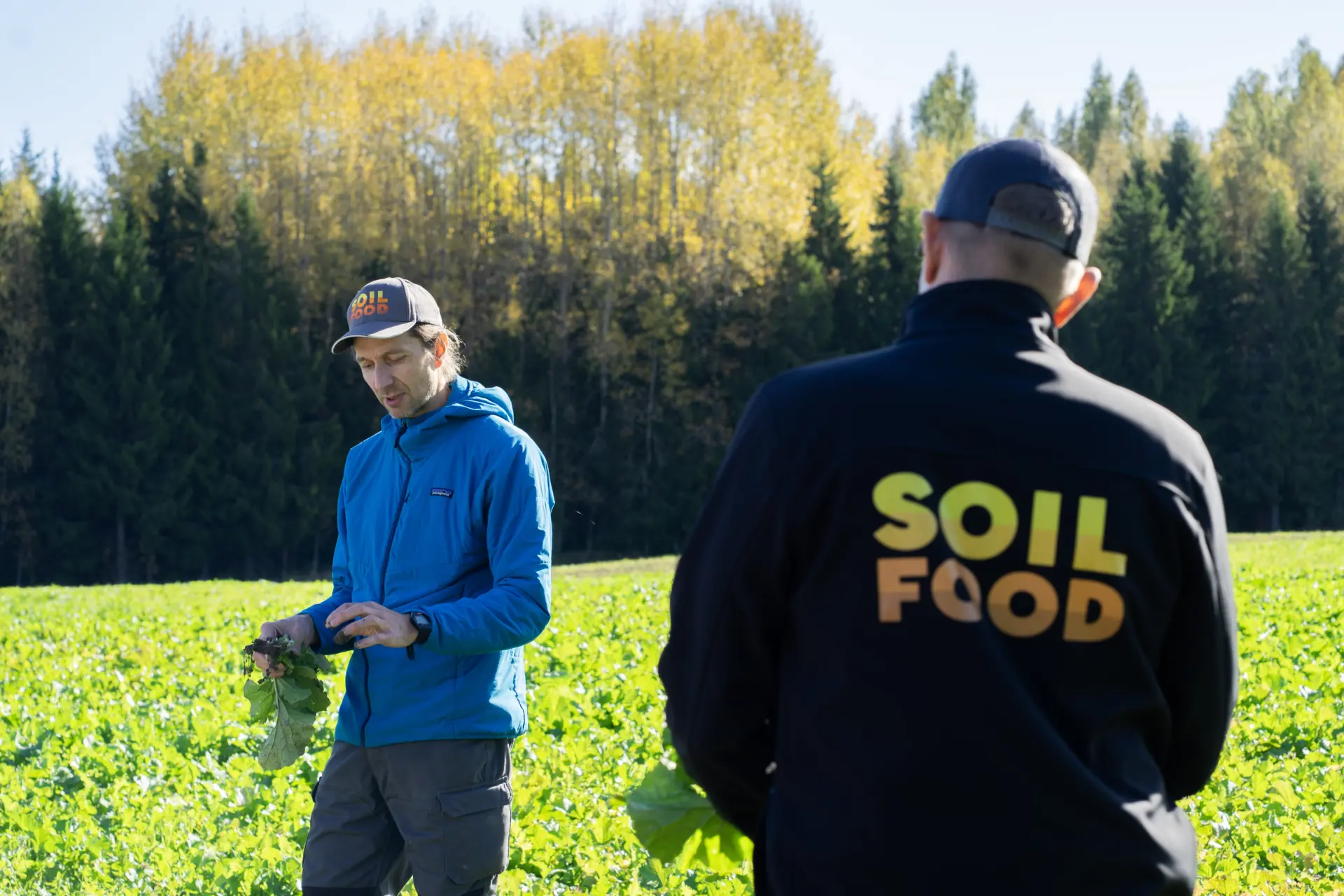
Stora Enso’s Imatra Mills and Soilfood have worked together for more than 10 years. Soilfood Oy refines circular economy products from industrial side streams. From the raw materials supplied by Stora Enso’s Imatra Mills, Soilfood makes recycled fertilisers, soil improvers and bedding materials.
Soilfood refines circular economy products using industrial side streams as its raw materials.
Stora Enso’s Imatra Mills supply Soilfood with lime- and fibre-rich side streams, which are refined into recycled fertilisers, soil improvers and bedding materials for agricultural use.
Forest industry side streams for agriculture and regenerative farming
“The Imatra Mills and Soilfood go back a long way together. The pioneering work on utilising industrial sludges began around 15 years ago with Tyynelän Maanparannus Oy, which later merged with Soilfood,” explains Teemu Klemetti, Environmental Manager at Stora Enso’s Imatra Mills.
Soilfood’s circular economy products bring considerable benefits to the farmers, because they improve soil fertility.
“Soil is one of the most important factors in farming,” says Juuso Joona, a founding member of Soilfood.
“Soil fertility can be improved in many ways. Soil improvement fibres increase the organic matter content of the soil, which in turn increases its water-holding capacity. The pH level of soil is also an essential factor for soil fertility. Finland’s acidic soils have traditionally been improved by liming,” Joona continues.
“Soil improvement fibres also protect waterways, because they reduce phosphorus leaching from fields. Soil in good condition retains water and nutrients better than soil in poor condition,” Joona says.
Making use of resource-efficient circular economy solutions in agriculture supports domestic food production, as well as self-sufficiency and security of supply. The benefits of healthy soil thus extend all the way to the environment and to society.
Teemu Klemetti says the partnership with Soilfood is highly important for the Imatra Mills today.
“As a result of energy efficiency measures, Stora Enso’s Imatra Mills have gone from being a buyer of bark to a seller of bark. Sludge from the wastewater treatment plant is burned in the bark boiler together with the bark. Because a significant share of the bark is sold to external power plants, not all of the wastewater treatment sludge can be sent to the bark pile,” Klemetti says.
If the share of sludge in the bark boiler’s fuel grew too large, it would considerably weaken the quality of the fuel mix.
“That in turn would cause operating problems at the bark boiler and so reduce the mills’ energy efficiency. For that reason, it is extremely important that we can supply side streams for soil improvement through Soilfood,” Klemetti continues.
Soilfood makes soil improvers such as structure lime, which raises soil pH, makes clay soil easier to work and reduces phosphorus runoff into waterways.
Photo: Juuso Joona, who runs the Tyynelä farm and is a founding member of Soilfood, presents the fields and their soil together with Mika Malin, Director of Agricultural Sales at Soilfood.
Photo: At the Tyynelä farm in Ahola, Joutseno, knowledge of new farming and forest management methods is produced according to the principles of regenerative farming.
Photo: Juuso Joona (left), who runs the Tyynelä farm and is a founding member of Soilfood, Mika Malin, Director of Agricultural Sales, Taika Sipponen, Circular Economy Manager, and Juha Oksanen, Board member and Laboratory Manager at South-Eastern Finland University of Applied Sciences.